
,
Wednesday, 14-October
FACULTIES» Tajik philology and journalism
The Faculty of Tajik Philology and Journalism was established in 1945 as the Faculty of Tajik Language and Literature, making it coeval with the University itself. During the 1956–1957 academic year, the faculty merged with the Faculty of History, resulting in the formation of the Faculty of History and Philology. From 1961 until the period of the National Independence of the Republic of Tajikistan, the history department was reorganized, and the faculty reverted to its original title as the Faculty of Tajik Language and Literature.
In 2009, following the establishment of the Journalism department, the faculty was officially renamed the Faculty of Tajik Philology and Journalism. Currently, the faculty offers full-time (internal) degree programs in the following specializations:
- Tajik Language and Literature;
- Linguistics and New Information Technologies;
- Tajik Language and Literature with an additional minor in Family Studies;
- Journalism.
Additionally, the faculty provides distance learning (correspondence) programs specializing in Tajik Language and Literature.
Tajik Language and Literature
The specialization in "Tajik Language and Literature" is offered at the faculty through both full-time (internal) and distance (correspondence) modes of study. The curriculum is designed to provide comprehensive training in philology and pedagogy.
Graduates of this program are qualified to pursue careers as educators of Tajik Language and Literature within institutions of general secondary education. Furthermore, the degree prepares students for professional roles in various cultural and academic sectors.
Journalism
The specialization in "Journalism" was established within the faculty in 2009. Since its inception, graduates of this program have successfully secured positions across a diverse range of professional sectors. Graduates are qualified to work in television, radio, print media (newspapers and magazines), and various digital mass media outlets (VMA/Mass Media).
A distinctive feature of the curriculum is the integration of practical sessions and SISP (Student's Independent Study under the Guidance of a Professor), which are conducted at the University’s faculty radio station, "Suroshi Javoni." Furthermore, students fulfill their educational internships at prominent broadcasting organizations, including TV Kulob, the Kulob branch of TV Safina, and TV Jahonnamo.
Linguistics and New Information Technologies
The specialization in "Linguistics and New Information Technologies" is designed to train professionals capable of integrating linguistic theory with modern information technology. Throughout their studies, students engage in a multidisciplinary curriculum that includes Russian and English languages, Information Technology (IT), and core philological sciences.
The program is delivered by faculty members who are highly qualified scholars and proficient in foreign languages. During IT-focused sessions, students gain practical skills in developing linguistic corpora of literary and scientific figures, as well as the digital compilation of dictionaries and lexicons.
Graduates of this program are versatile professionals qualified for various roles, including:
- Teachers of Tajik Language;
- Software Developers/Programmers;
- Desktop Publishers (Layout Designers);
- Technical specialists in linguistic data processing.
Tajik Language and Literature (with an additional minor in Family Studies)
Established in 2020, this specialization is designed to train qualified educators in Tajik Language and Literature, as well as specialists in Family Studies (Family Ethics and Education).
The academic programs offered by the faculty are highly beneficial to society, as graduates serve in various sectors of the national economy. The educational process is organized according to the Credit Mobility System for both full-time (internal) and distance (correspondence) modes of study, ensuring international academic standards.
Currently, the faculty's academic and research activities are managed by three specialized departments:
Department of Linguistics and the History of Language
The Department of Linguistics and the History of Language is an integral structural unit of the higher professional educational institution, responsible for coordinating academic, scientific, and methodological activities among students and faculty members.
The department’s faculty delivers theoretical lectures and practical seminars on a wide range of subjects, including:
- Tajik Language and History of the Language;
- Stylistics and Speech Culture (Oratory);
- Ancient Iranian Languages;
- Linguistic Analysis of Texts;
- Classical Script and Orthography.
The department is currently headed by Abdulmajid Davlatov, Candidate of Philological Sciences. The teaching staff consists of 15 instructors, including highly qualified scholars with advanced academic degrees.
To foster student research, the department hosts the scientific circle "The Young Linguist and Methodist," led by Assistant Lecturer Husnigul Odinaeva.
Department of Tajik Literature
The Department of Tajik Literature is a fundamental structural component of the University and the Faculty of Tajik Philology and Journalism. It is responsible for organizing academic, educational, scientific, and methodological initiatives for both students and faculty members.
The department is currently chaired by Shamshodi Jamshed, Candidate of Philological Sciences and Associate Professor. As of 2026, the department comprises 13 faculty members and 1 administrative staff member (registrar), including a significant number of scholars with advanced academic degrees.
The department hosts two prominent scientific circles:
- "The Literary Critic": Led by Senior Lecturer Giyoeva Takhmina.
- "Shahnameh Studies" (Shohnomakhoni): Dedicated to the analytical study of classical epic heritage.
Department of Journalism
The Department of Journalism focuses on the field of mass media, offering specialized professional training within its specific academic discipline. As of 2026, the department's staff includes 9 faculty members, 1 research administrator, and 1 administrative assistant, many of whom hold advanced academic degrees.
To enhance the practical and creative skills of students, the department hosts the scientific circle "The Young Journalist." The activities of this circle are currently supervised by Assistant Lecturer Shamsiya Navruzova.
Establishment and Evolution: The Faculty of Tajik Philology and Journalism is coeval with the University, having been established in 1945 under the original name of the Faculty of Tajik Language and Literature.
During the 1956–1957 academic year, the Faculty of Tajik Language and Literature was merged with the Faculty of History, leading to the formation of the Faculty of History and Philology. From 1961 until the period of the State Independence of the Republic of Tajikistan, the history department was reorganized, and the faculty reverted to its status as the Faculty of Tajik Language and Literature.
Pioneering Faculty and Academic Recruitment
The first cohort of educators at the faculty included Anver Aminov, Muhammadi Ismatulloev, Qodir Rustamov, Said Ismoilov, Ghulom Yatimov, and Shahidi Karimov.
In the years following the establishment of the Kulob State Pedagogical Institute, the Ministry of Education of the Republic of Tajikistan facilitated the recruitment of a distinguished group of scholars to strengthen the academic staff. This group primarily consisted of graduates from the Tajik State University and individuals who had completed postgraduate studies (aspirantura) at various universities in Dushanbe. Notable among these scholars were:
- Asadullo Sufiev
- Kh. Muhibov
- Barot Murodov
- Madokhir Qurbonov
- Izatullo Tamlikhoev
- A. Sattori
- Anver Aminov
- Shukri Ibrohimov
Contributions of Eminent Scholars and Academic Institutions
To further strengthen the academic capacity and provide expert mentorship to the faculty at the Kulob State Pedagogical Institute, the Ministry of Education of the Republic of Tajikistan facilitated the involvement of renowned scholars from the nation’s leading intellectual centers. These included the Rudaki Institute of Language and Literature of the Academy of Sciences of Tajikistan, the Tajik State University, and the Dushanbe Pedagogical Institute.
Among the prominent academic figures who provided their expertise and support were:
- Academicians: Abdulghani Mirzoev, Bobojon Niyozmuhammadov, Rajab Amonov, and Muhammadjon Shukurov.
- Professors: Sohib Tabarov, Razzoq Ghafforov, Sharofiddin Rustamov, Dodikhudo Karamshoev, Muhammadi Ismatulloev, Abdulghani Eshonjonov, Nosirjon Ma'sumi, Abdusattor Mirzoev, and Sobirjon Mirzoev.
This strategic academic collaboration played a vital role in establishing a rigorous scholarly environment and fostering the professional growth of the local teaching staff.
Historical Expansion and Structural Evolution
During the initial operational period of the Kulob Teacher Training Institute, the Faculty of Tajik Language and Literature adopted a multidisciplinary approach. In addition to training specialists in Tajik Language and Literature, the faculty also prepared educators for Russian Language and Literature. A notable figure from this period was Grigory Savvich Mikhaylichenko, who served as a prominent lecturer of Russian Language and Literature within the Department of Tajik Language and Literature.
At the time of the Institute's foundation, five primary departments were established, one of which was the Department of Tajik Language and Literature, then part of the Faculty of Tajik Philology.
A significant structural transition occurred in 2009. Following the establishment of a dedicated Journalism division, the Faculty of Tajik Language and Literature was officially renamed the Faculty of Tajik Philology and Journalism, reflecting its expanded academic scope and its role in training media professionals.
- FOUNDERS OF THE FACULTY
The establishment of the Faculty of Tajik Philology during the early years of the Kulob Teacher Training Institute was a vital response to the socio-cultural demands of the time. There was a critical necessity for qualified specialists to serve in educational and cultural institutions, the press, and various state and public sectors across the Republic.
Due to an initial shortage of faculty members holding advanced academic degrees, the most distinguished graduates of the faculty were recruited into teaching positions. Notable among them are Saidqul Sabzaev, Rahim Saidov, Murodali Nabiev, Shovali Saidja’farov, Ahmad Aliev, Ghoib Mirzoev, Iskandar Ikromov, and Ma’rufi Rajab, all of whom subsequently achieved the academic ranks of Doctor of Sciences and Candidate of Sciences.
From the 1970s through the late 1990s, the further development and academic prestige of the faculty were significantly shaped by the contributions of eminent scholars. Key figures included:
- Professors: Rahim Saidov, Iskandar Ikromov, and Alamkhon Kucharov.
- Associate Professors: Rustam Qodirov, Soat Chalishev, Barot Nozimov, Saidqul Sabzaev, Shovali Saidja’farov, Yorali Sodiqov, Ghoib Mirzoev, Ahmad Aliev, Qayum Sangov, Jumakhon Alimi, Barot Latifov, and many others.
- FACULTY LEADERSHIP (CHRONOLOGICAL OVERVIEW)
The faculty has been led by numerous prominent scholars and distinguished academic figures throughout its history. Abdullo Rahimov was appointed as the inaugural Dean of the faculty (which was then known as the Faculty of Tajik Language and Literature). He was succeeded by Shahidi Karimov, Candidate of Philological Sciences.
Following the merger with the Department of History to form the Faculty of Philology and History, the leadership was as follows:
- 1953–1965: Husayn Boghirovich Boghirov
- 1965–1974: Rustam Qodirov, Candidate of Philological Sciences
- 1974–1981: Associate Professor Soat Chalishev
- 1981–1985: Professor Rahim Saidov
- 1985–1992: Associate Professor Barot Nozimov
- 1992–2004: Associate Professor Shovali Saidja’farov
- 2004–2009: Professor Rahim Saidov, Doctor of Philological Sciences (second term)
From 2009 to 2023, the deanship was held by the following associate professors and senior lecturers: Saydahtam Yunusov, Grez Ibrohimov, Ghoib Mirzoev, Farhod Shafiev, Bakhtiyor Ghafforov, Nodira Ashurova, Zaynalbi Kholiqova, Gadomad Zulfiev (2017–2018), Manuchedhr Safarzoda, and Eraj Abdusamadzoda (2020–2023).
Since 2023, the leadership responsibilities have been reassigned to Associate Professor Gadomad Zulfiev for a second tenure.
- FIELDS OF ACTIVITY AND SPECIALIZATIONS
Until 2008, the faculty operated as a single Department of Tajik Language and Literature, primarily training educators for various sectors of the national economy. Through the strategic and productive efforts of the university administration during the 2008–2009 academic year, a Journalism specialization was launched under the Department of Tajik Literature, welcoming its inaugural cohort of students. By 2011, as the program matured, a rector's decree established an independent Department of Journalism.
In the 2013–2014 academic year, the faculty introduced a modern, technologically integrated specialization: "Linguistics and New Information Technologies." Furthermore, in 2020, an additional program was established: "Tajik Language and Literature with a minor in Family Studies." These developments reflect the faculty's commitment to adapting its academic offerings to the evolving demands of the contemporary era.
- ACADEMIC INFRASTRUCTURE AND RESEARCH SOCIETIES
To enhance the quality of education in linguistics, literary studies, and journalism, the faculty maintains specialized resource centers and subject-specific classrooms. These facilities are fully equipped with relevant academic literature and modern technical equipment to support effective learning.
To foster professional and scientific growth among students, several academic societies are active under the specialized departments. These include:
- "The Young Linguist and Methodist"
- "The Journalist"
- "The Literary Critic"
Furthermore, the faculty hosts the scientific-practical circle "Shahnameh Studies" (Shohnomakhoni) under the supervision of Dr. Nodira Ashurova. In this forum, students present research and reports on the "Shahnameh," one of the world's greatest epics and an immortal masterpiece of Persian-Tajik classical literature.
- SCIENTIFIC RESEARCH AND ACADEMIC CONTRIBUTIONS
Scientific research at the faculty is a continuous process, involving both faculty members and students as an integral part of the educational curriculum. Professors, doctoral students, and research fellows (aspirants) conduct systematic studies across various specialized linguistic and literary domains.
The faculty members are active participants in national and international scientific conferences. Notably, the scholars in the field of philology from this faculty have gained recognition not only within the region but throughout the Republic. Prominent figures among them include:
- Professors: Alamkhon Kucharov, Jumakhon Alimi, Hotam Asozoda, and Nodira Ashurova.
- Associate Professors and Distinguished Scholars: Yorali Sodiqov, Zaynalbi Kholiqova, Gulbonu Odinaeva, Sharofat Khudoydodova, Eraj Abdusamadzoda, Gadomad Zulfiev, Jahongir Temurov, Faroghat Davlatova, Shamshodi Jamshed, Abdulmajid Davlatov, Alisheri Abdulmajid, Farzona Ismoilova, Manuchedhr Safarzoda, Marhabo Odinaeva, and Rudobai Ismoil Qurbonzoda.
CHRONOLOGY OF THE FACULTY DEANSHIP
The following table outlines the chronological leadership of the faculty since its inception in 1945, highlighting the distinguished scholars who have served as Deans:
|
No. |
Name of the Dean |
Period of Leadership |
|
1 |
Abdullo Rahimov |
1945 – 1947 |
|
2 |
Shahidi Karimov |
1947 – 1948 |
|
3 |
Bagirov Huseyn Boghirovich |
1953 – 1965 |
|
4 |
Qodir Rustamov |
1965 – 1974 |
|
5 |
Soat Chalishev |
1974 – 1981 |
|
6 |
Rahim Saidov |
1981 – 1985; 2004 – 2009 |
|
7 |
Barot Nozimov |
1985 – 1992 |
|
8 |
Shovali Saidja’farov |
1992 – 2004 |
|
9 |
Saydahtam Yunusov |
Feb 2009 – Nov 2009 |
|
10 |
Farhod Shafiev |
Nov 2009 – Feb 2010 |
|
11 |
Bakhtiyor Ghafforov |
Feb 2010 – Nov 2010 |
|
12 |
Grez Ibrohimov |
Nov 2010 – Nov 2011 |
|
13 |
Ghoib Mirzoev |
Nov 2011 – Dec 2012 |
|
14 |
Nodira Ashurova |
Dec 2012 – Nov 2015 |
|
15 |
Zaynalbi Kholiqova |
Nov 2015 – Sep 2017 |
|
16 |
Gadomad Zulfiev |
Sep 2017 – Aug 2018 |
|
17 |
Nodira Ashurova |
Aug 2018 – Oct 9, 2018 |
|
18 |
Safarzoda Manuchedhr Najot |
Oct 9, 2018 – 2019 |
|
19 |
Abdusamadzoda Eraj Abdusamad |
2019 – 2023 |
|
20 |
Zulfiev Gadomad Nurmadovich |
2023 – Present |
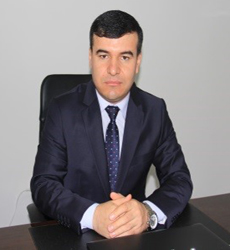
GADOMAD NURMADOVICH ZULFIEV
Dean of the Faculty Candidate of Philological Sciences, Associate Professor
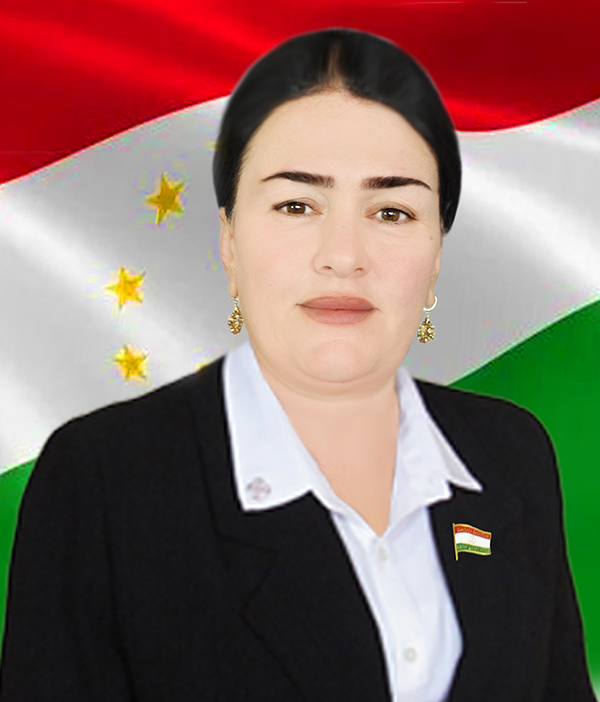
Deputy Dean for Academic Affairs Candidate of Philological Sciences
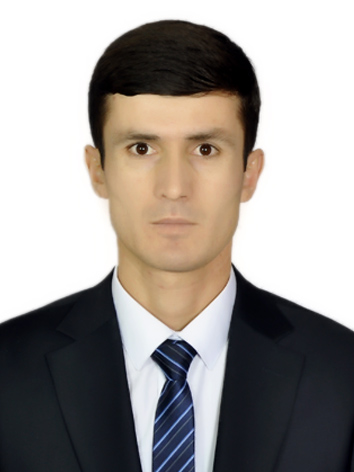
NASIMJONI SAIDAZAM
Deputy Dean for Student Affairs and Discipline
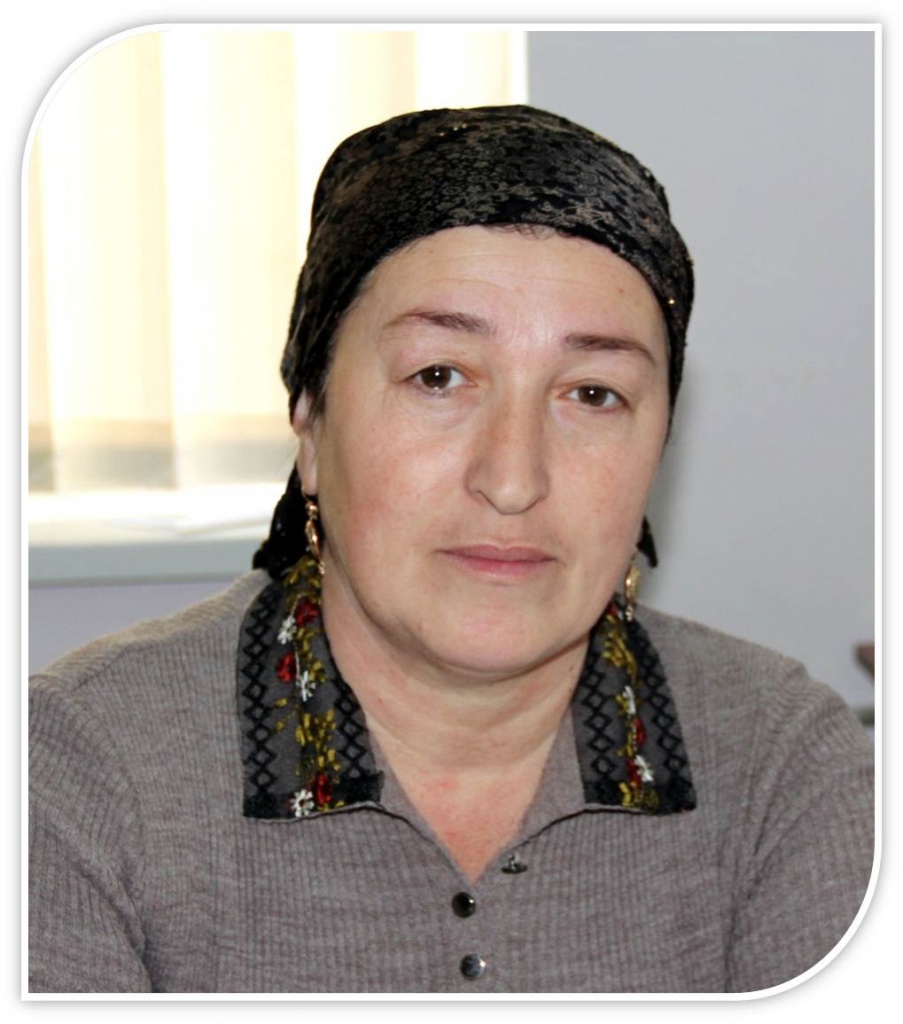
RIZOEVA RANO
Academic Coordinator
Address: 16 S. Safarov St., Kulob, Republic of Tajikistan, Location: Kulob State University named after Abuabdullo Rudaki, Administrative Building, 4th and 5th Floors.
Office Phone: (+992 3322) 2-36-68
E-mail: fil.tojik@kgu.tj
FACULTIES
- Tajik philology and journalism
- Russian philology
- Foreign philology
- Education and culture
- Physics, mathematics and informatic
- Financial and economic
- Geography and digital economic
- History, law and international relations
- Chemistry and Biology
- Physical education and training of military defense