
,
Wednesday, 14-October
HISTORICAL REMEMBRANCE AND THE EDUCATION OF PATRIOTIC VALUES
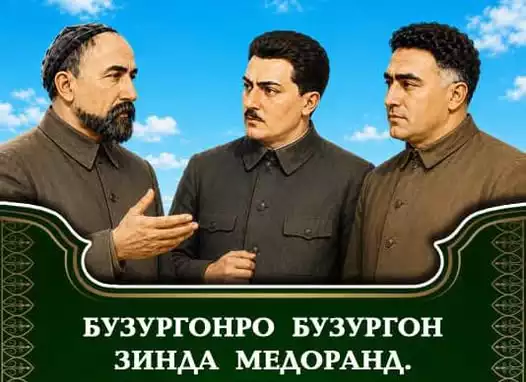
During the years of independence of Republic of Tajikistan, the issues of respecting national history and reviving the memory of prominent national figures have acquired particular significance. Turning to the past, studying the pages of history, and appreciating the contributions of devoted sons of the nation are considered among the essential foundations of national self-awareness. In this context, the initiative to return to the homeland a handful of soil from the resting places of Nusratullo Makhsum, Shirinsho Shotemur, and Nisor Muhammad carries profound political and spiritual importance.
This initiative, implemented under the leadership of Emomali Rahmon, is regarded as an expression of recognition and respect for individuals who made significant contributions to state-building, intellectual awakening, and the protection of the interests of the Tajik nation. Although their lives were marked by hardship and political repression during a particular historical period, today their names are remembered with deep respect as loyal sons of the nation.
The return of soil from the burial places of these historical figures to their homeland should not be viewed merely as a symbolic ceremonial act. Rather, it represents an initiative with deep historical, moral, and educational meaning. A nation that honors the memory of its distinguished sons demonstrates its commitment to preserving its historical heritage, cultural traditions, and national values. Such an approach strengthens feelings of national pride and respect for history among the younger generation.
Today’s youth require genuine examples of patriotism and civic dedication. The lives and activities of Nusratullo Makhsum, Shirinsho Shohtemur, and other devoted representatives of the nation may serve as a meaningful school of national consciousness for young people. Studying their lives encourages the younger generation to develop a sense of responsibility, loyalty to the homeland, and respect for national values.
This event also demonstrates that respect for history is one of the key factors contributing to state stability and national unity. A society that understands its past and appreciates the contributions of its worthy sons is capable of building a stable future and a healthy social environment. From this perspective, the initiative to return to the homeland a handful of soil from the resting places of national heroes occupies a special place in the history of independent Tajikistan as a symbol of reverence for national values and preservation of historical memory.
Murodzoda Bahriddin, Associate Professor of the Department of Linguistics and Comparative Typology