
,
Thursday, 15-October
THE IMPACT OF INDUSTRIAL WASTE ON THE ENVIRONMENT AND ECOSYSTEMS
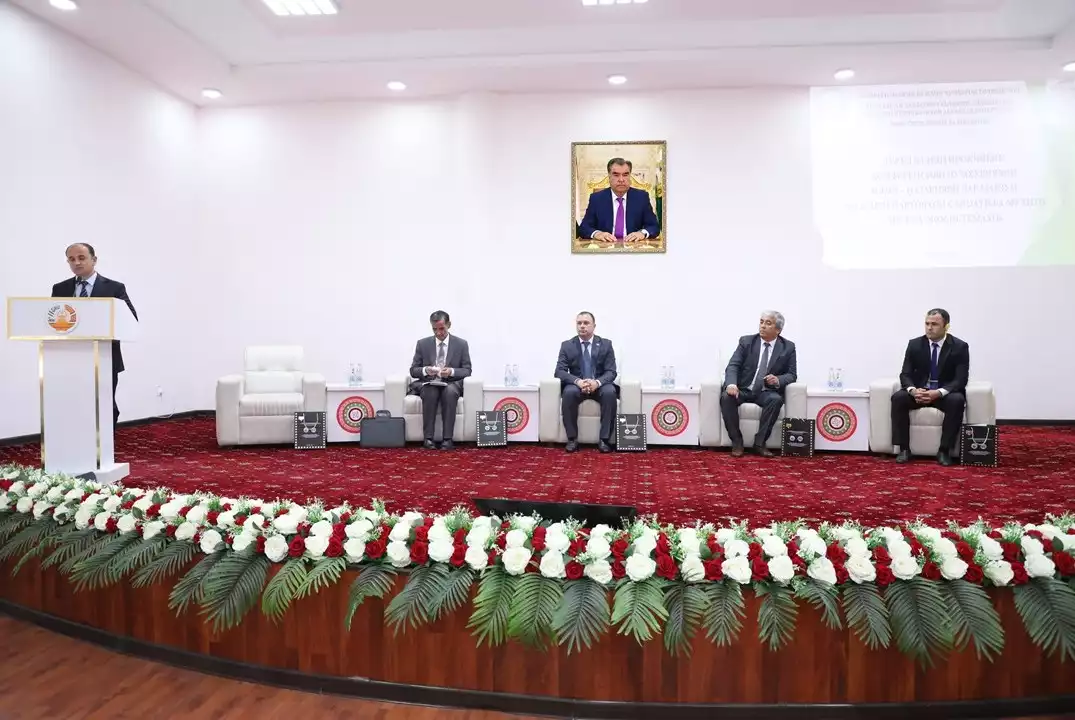
Under this title, today (16.05.2026), at the initiative of the Department of Biology and Methods of Teaching Biology of the Faculty of Chemistry and Biology of Kulob State University named after Abuabdullohi Rudaki, a republican scientific-theoretical conference was held with the participation of scholars and researchers from higher educational institutions of the country, as well as university lecturers and students. The conference was organized to implement the instructions and directives of the Founder of Peace and National Unity - Leader of the Nation, President of the Republic of Tajikistan, Honourable Emomali Rahmon, dedicated to the International Decade for Action “Water for Sustainable Development” (2018–2028), the declaration of 2026 as the “Year of Expanding Creative and Constructive Works and Strengthening National Self-Awareness and Identity,” the “Twenty Years of Study and Development of Natural, Exact and Mathematical Sciences” (2020–2040), and the celebration of the 35th anniversary of the State Independence of the Republic of Tajikistan.
Opening the conference, the Rector of the university, Professor Safarzoda Munir Vatan, warmly welcomed the scholars, researchers, and guests and expressed gratitude for their participation. He emphasized that rapid industrial development, alongside its economic benefits, has also generated serious environmental problems. Industrial waste, air, water, and soil pollution, biodiversity loss, and ecosystem changes are among the issues requiring serious attention from researchers and relevant institutions.
Analyses show that the increasing volume of industrial and household waste has become one of today’s most pressing environmental challenges. Under such conditions, the use of modern waste-processing technologies, the introduction of effective environmental management systems, the development of cooperation between science and industry, and raising public environmental awareness have become especially important.
It was noted that during the years of independence, under the wise leadership and constructive policy of the Founder of Peace and National Unity - Leader of the Nation, President of the Republic of Tajikistan, Honourable Emomali Rahmon, issues related to environmental protection, climate change, rational use of water resources, and the development of a “green economy” have become one of the priority directions of state policy. Tajikistan’s international initiatives in this field, including the declaration of 2025 as the “International Year of Glacier Preservation,” have been recognized by the international community as timely and significant initiatives.
During the plenary session, four scientific reports were presented, including: Turdiev Turdi, Candidate of Geographical Sciences and Associate Professor of the Department of Physical Geography of Khujand State University named after Academician Bobojon Gafurov, on the topic “Accumulation and Ablation Areas of Glaciers”; Kholikzoda Safar, Candidate of Chemical Sciences and Associate Professor of the Department of Chemistry and Methods of Teaching Chemistry of Kulob State University named after Abuabdullohi Rudaki, on the topic “International Initiatives of the Leader of the Nation, Honourable Emomali Rahmon, on Water and Climate”; Boboev Komron, Doctor of Philosophy (PhD) and Head of the Department of Chemical Safety and Security of the Agency for Chemical, Biological, Radiation and Nuclear Safety of the National Academy of Sciences of Tajikistan, on the topic “The Impact of Uranium-Containing Waste on the Environment”; and Hisaynov Daler, Candidate of Biological Sciences and Senior Lecturer of the Department of Biology and Methods of Teaching Biology of Kulob State University named after Abuabdullohi Rudaki, on the topic “Water and Its Importance in Nature.” These scientific reports focused on studying and discussing the impact of industrial waste on the environment and ecosystems.
It was emphasized that environmental protection and ensuring ecological safety are among the most important tasks of modern society, while studying the effects of industrial waste, rational use of natural resources, and the introduction of environmentally safe technologies are essential for maintaining ecological balance and protecting public health.
According to the Vice-Rector for Science and Innovation, Associate Professor Kamolzoda Shodmon, after the opening plenary session the conference continued its work in the second half of the day in accordance with the program, including the discussion of more than 50 scientific articles presented by scholars and researchers from higher professional educational institutions across the country.