
,
Wednesday, 14-October
LAUNCH OF “SCIENCE WEEK” AT KULOB STATE UNIVERSITY
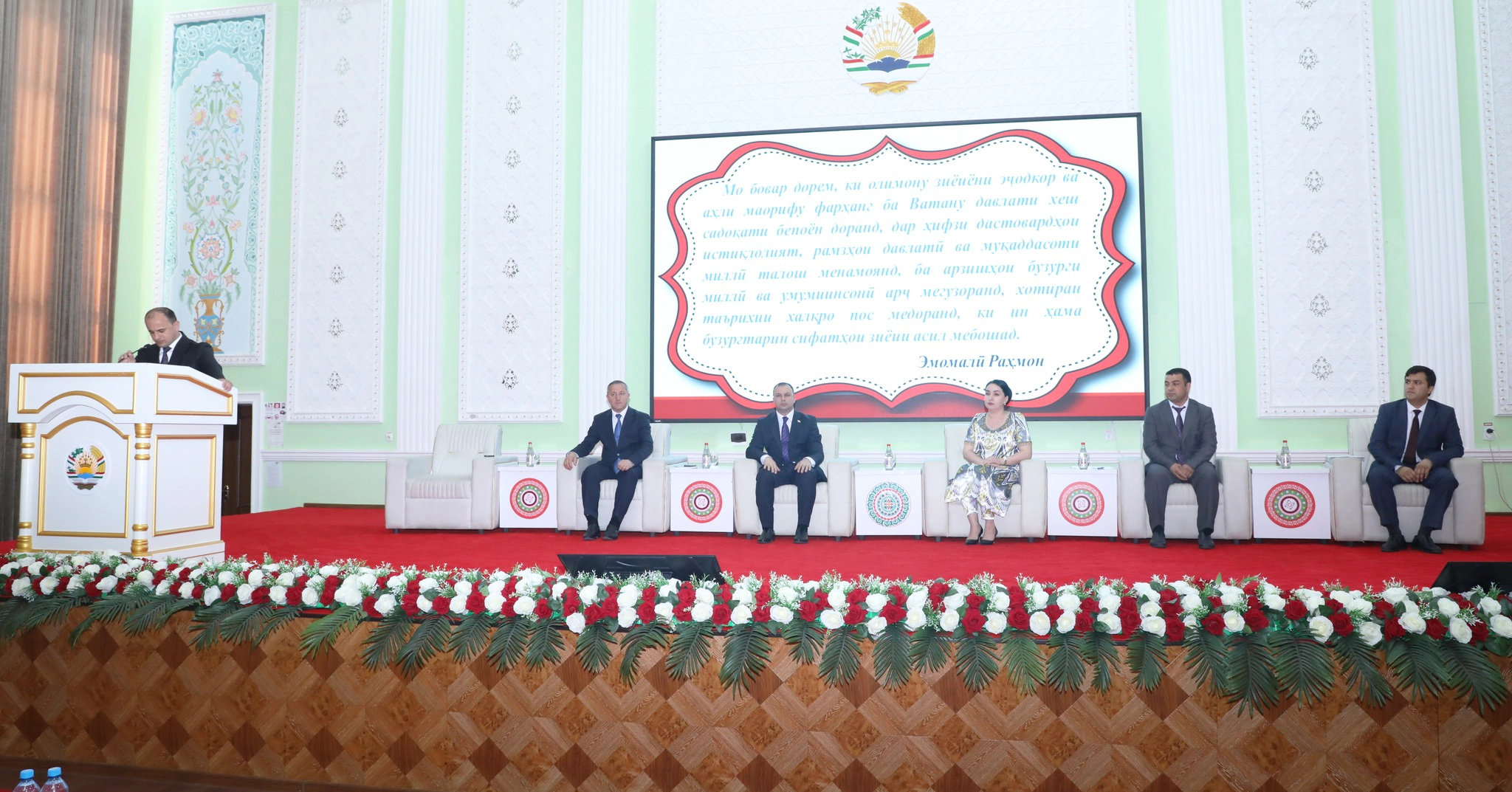
On April 4, 2026, at Kulob State University named after Abuabdullohi Rudaki, within the framework of celebrating Tajik Science Day (April 15), “Science Week” was officially announced for the period from April 6 to April 11, 2026. The program includes scientific circles and conferences.
On this occasion, an opening scientific and theoretical conference was held on April 6, 2026, with the participation of faculty members and students. The conference was dedicated to Tajik Science Day, the declaration of 2025–2030 as the “Years of Development of the Digital Economy and Innovation,” 2020–2040 as the “Twenty Years of Study and Development of Natural, Exact and Mathematical Sciences,” 2026 as the “Year of Expansion of Construction and Creative Works and Strengthening National Self-Awareness,” and the upcoming celebration of the 35th anniversary of State Independence.
The event was attended by the Rector of the university, Doctor of Pedagogical Sciences Safarzoda Munir Vatan, vice-rectors, deans, heads of departments, faculty members, students, and media representatives.
At the beginning, participants visited an exhibition of scientific and research achievements presented by scholars, faculty, and students.
The conference then continued in the cultural hall with the national anthem. In his opening remarks, the Rector summarized the research activities of 2025 and outlined plans for 2026, emphasizing that science, education, culture, and enlightenment have historically played a crucial role in the development and sustainability of nations.
It was highlighted that the development of any country is inseparably linked to its system of science and education and the level of literacy of its society. The light of knowledge ensures the sustainability of nations. Special attention to science and education as priority areas has been consistently emphasized by President Emomali Rahmon since the early years of independence.
It was noted that currently, within 38 departments of the university, research is conducted across 13 scientific fields, 31 specialties, 46 problems, and 50 topics. The university employs 520 faculty members, including 11 Doctors of Sciences (professors), 80 Candidates of Sciences (associate professors), 58 Candidates of Sciences (senior lecturers), 4 Candidates of Sciences (assistants), 125 senior lecturers, and 242 assistants.
In 2025, 28 researchers defended their dissertations, including 2 doctoral and 26 кандидатские theses. In the first quarter of 2026, 4 researchers - Rahmonzoda Guldona, Mirzoev Suhrob, Avalova Zulfiya, and Nodirzoda Komiljon - successfully defended their Candidate of Sciences dissertations.
It was also noted that PhD candidates are currently preparing their dissertations for defense. According to the program, the following speakers delivered presentations:
Ayubzoda Safar Ayub, Associate Professor, Vice-Rector for International Relations - “Fundamentals of using artificial intelligence in improving information security systems”; Rasulzoda Lutfiya Nurali, Candidate of Economic Sciences, Associate Professor, Head of the Department of Science and Innovation - “Green economy as a foundation of sustainable development”; Davlatzoda Sherali Davlat, Candidate of Geographical Sciences, Associate Professor, Head of the Department of Geography and Tourism - “Protected areas of the Kulob region as a factor in tourism development”; Sharipov Safarali Rajabalievich, Candidate of Physical and Mathematical Sciences, Senior Lecturer - “The importance of the cryosphere in Earths climate”.
During the discussion session, Vice-Rector for Science and Innovation Kamolzoda Shodmon informed participants that from April 7 to April 11, more than 950 scientific papers by faculty and students will be reviewed and discussed in sectional meetings.
At the conclusion of the conference, it was expressed that the results of this event and subsequent activities within “Science Week” will contribute to the advancement of scientific research, deeper understanding of history, philosophy, and culture, and the further development of Tajik science.