
,
Monday, 19-October
INTERNATIONAL CONFERENCE. ASSESSING CLIMATE CHANGE AND WAYS TO MITIGATE IT IN THE PROTECTION OF HYDROLOGICAL AND CRYOSPHERIC RESOURCES
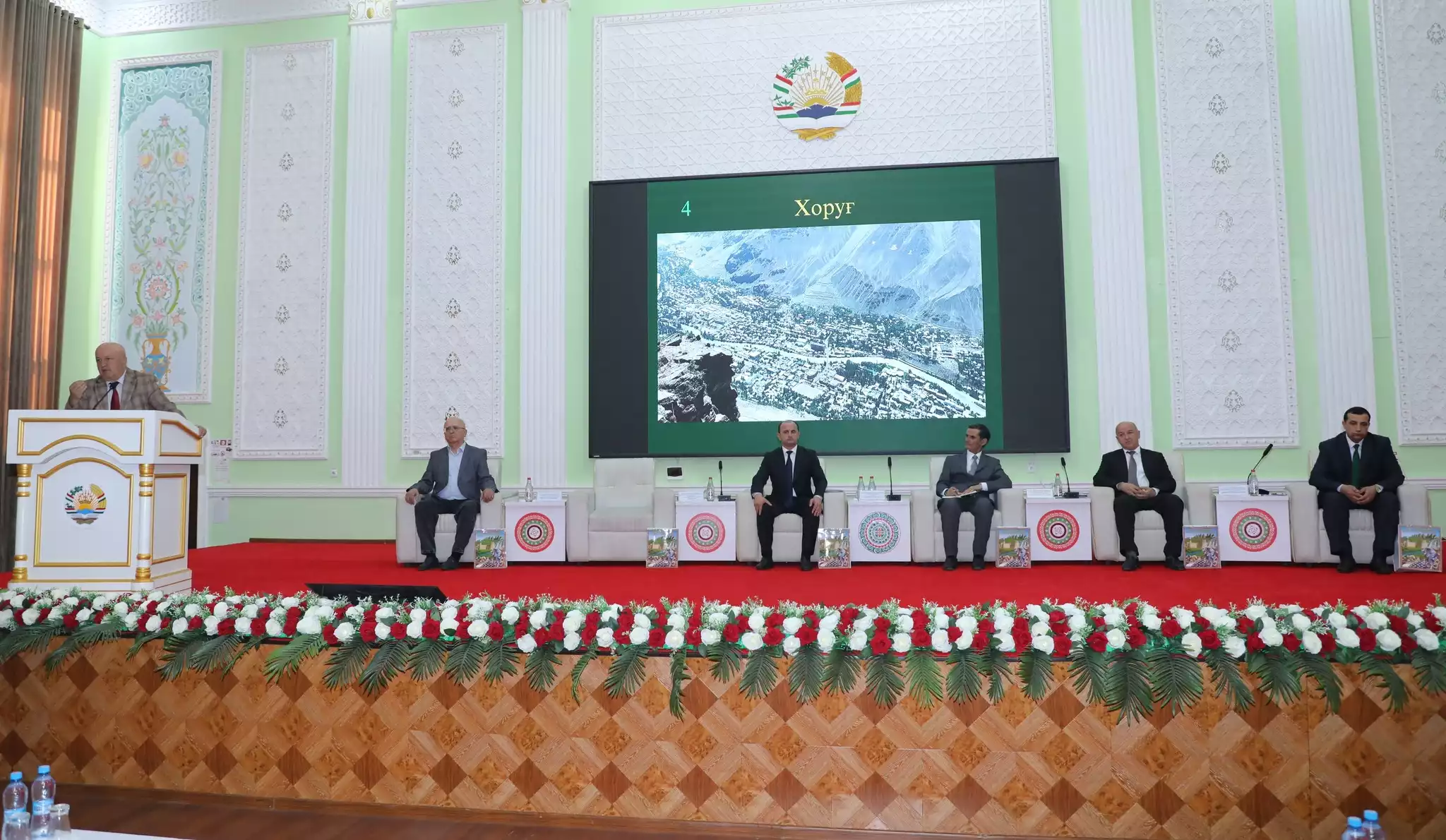
On March 31, 2026, at the initiative of the Faculty of Geography and Digital Economy of Kulob State University named after Abuabdullohi Rudaki, an international scientific and theoretical conference was held under the title “Assessing Climate Change and Ways to Mitigate It in the Protection of Hydrological and Cryospheric Resources.” The event was organized in line with the directives of the countrys leadership and within the framework of the UN General Assembly resolution “International Decade of Action for Cryospheric Sciences (2025–2034).” It brought together experts from various national institutions, as well as university faculty members and students.
In his opening remarks, Vice-Rector, Associate Professor Kamolzoda Shodmon welcomed the participants and emphasized that climate change has become one of the most serious threats to sustainable human development. One of its most alarming consequences is the rapid melting of glaciers and degradation of the cryosphere. Mountain regions are particularly vulnerable, putting the livelihoods of millions of people, water resources, and fragile ecosystems at risk. In this regard, the global community has increasingly focused on adopting key international initiatives to protect glaciers and the cryosphere.
The Republic of Tajikistan, under the leadership of President Emomali Rahmon, has taken an active and leading role in addressing climate and water-related issues at international platforms. The global support for the initiatives proposed by the Leader of the Nation highlights the country’s growing role in global environmental policy.
During the plenary session, several key presentations were delivered, including by Professor Akbar Mamadrizokhonov (Khorog State University), Associate Professor Ansor Niyozi (National Academy of Sciences of Tajikistan), Odiaboy Majidov (NAS of Tajikistan), Professor Alexander Ivanovich (Perm State University, online), and Aziz Mirzoev (Kulob State University). Their reports covered sustainable development in mountain regions, technogenic landscapes, climate impact on mountain ecosystems, tourism geography, and the Aral Sea crisis and its effects on Central Asian glaciers.
In the discussion session, Associate Professor Kholiqzoda Safar emphasized the importance of expanding research on climate change impacts and strengthening scientific work in this field.
The conference continued in two parallel sections, with presentations delivered in Tajik, Russian, and English, both in-person and online. More than 70 scholars from domestic and international institutions contributed with research papers, creating a strong platform for discussing pressing issues and identifying practical solutions.