
,
Friday, 09-October
UNANIMOUS SUPPORT FOR THE LEADER OF THE NATION’S NEW INITIATIVE AT KULOB STATE UNIVERSITY
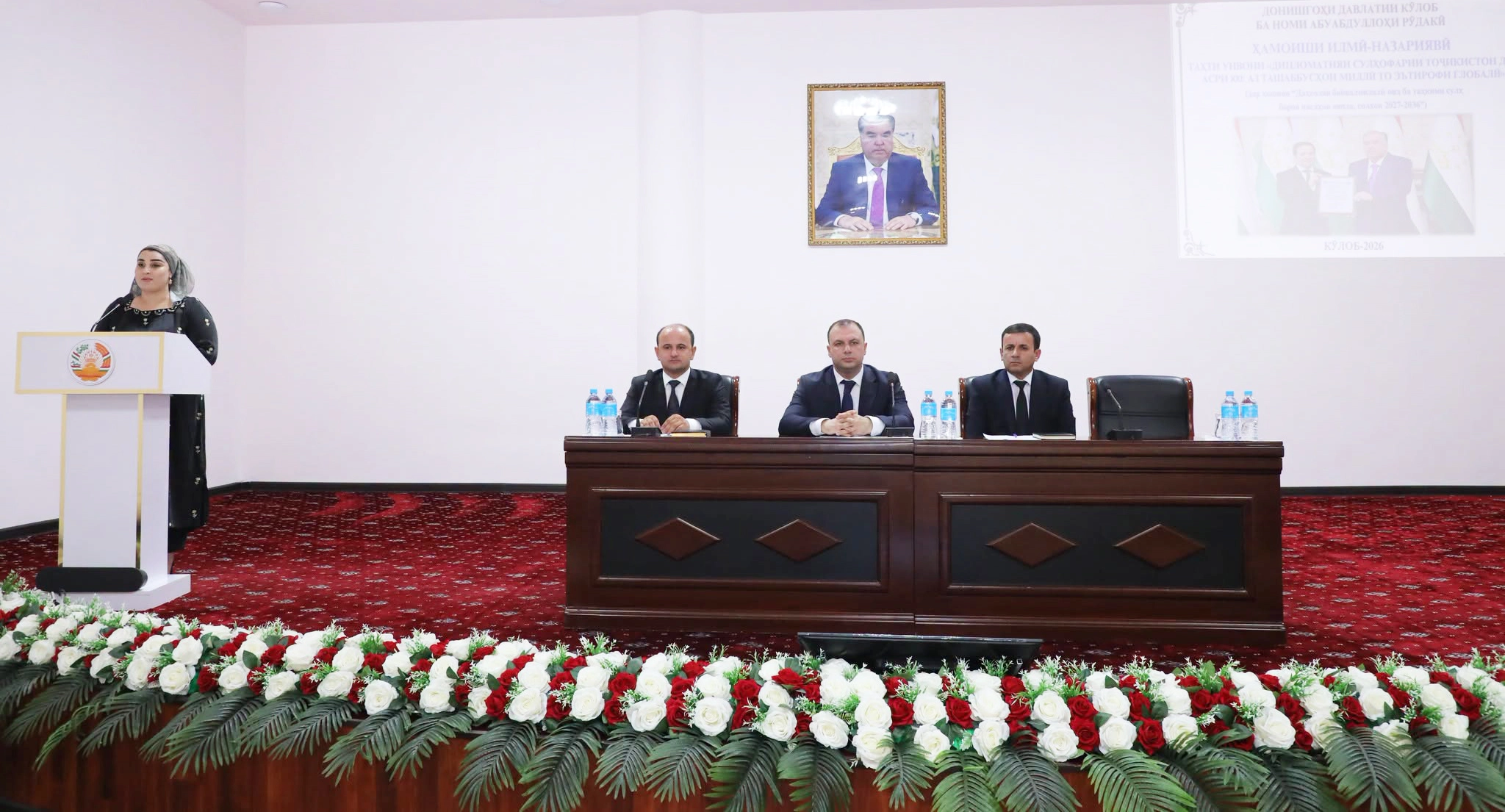
On June 29, 2026, Kulob State University named after Abuabdullohi Rudaki hosted a scientific and theoretical conference entitled “Tajikistans Peacebuilding Diplomacy in the 21st Century: From National Initiatives to Global Recognition.” The conference was dedicated to the unanimous adoption of the latest initiative put forward by the Founder of Peace and National Unity, Leader of the Nation, President of the Republic of Tajikistan, Honourable Emomali Rahmon, and to the adoption by the United Nations General Assembly of the resolution entitled “International Decade for Strengthening Peace for Future Generations (2027–2036).” Scholars, faculty members, and university staff warmly welcomed this historic achievement of Tajik diplomacy with a strong sense of patriotism and pride.
The conference was opened by the Rector of Kulob State University named after Abuabdullohi Rudaki, Doctor of Pedagogical Sciences, Professor Safarzoda Munir Vatan. In his remarks, he emphasized that the adoption of this resolution represents international recognition of the peace-loving policy of the Republic of Tajikistan and demonstrates the global communitys confidence in the constructive initiatives of the Leader of the Nation. He stated: “It is a matter of great pride and honour that, thanks to the wise policy of the Leader of the Nation, Honourable Emomali Rahmon, the Republic of Tajikistan has been recognized internationally not only as a peace-loving and unity-oriented state, but also as an active initiator of the global agenda for peace and peaceful coexistence.”
He further noted that the adoption of this historic resolution is another clear indication that the Republic of Tajikistan has moved beyond being merely a participant in international processes and has become one of the leading initiators of the global peace agenda. According to the Rector, this significant achievement of the countrys foreign policy further increases the responsibility of the academic community and higher education institutions, as educating young people in the spirit of peace, tolerance, national identity, and a profound understanding of Tajikistans peacebuilding experience is among their key responsibilities. He also expressed confidence that the universitys faculty members and researchers would continue to make valuable contributions to the study and promotion of the values of peace, constructive diplomacy, and the international initiatives of the Republic of Tajikistan.
Subsequently, the Head of the Department of History Teaching Methodology, Doctor of Philosophy (PhD) in History, Mehrafruz Buri Kholmurodzoda, delivered a presentation entitled “The Role of Tajikistan in Strengthening Global Peace and Security.” He emphasized that the adoption of the new resolution clearly demonstrates that Tajikistans diplomacy now plays an effective role in shaping the global peace agenda. According to him, Tajikistans peacebuilding experience has transcended national values and has become an internationally recognized model, while the Leader of the Nations consistent initiatives on the global stage hold great strategic significance.
The conference continued with a presentation by Nasullo Sayfiddinovich Abdulloev, Candidate of Political Sciences and Associate Professor of the Department of Political Science, on the topic “National Unity as the Main Factor of Peace, Stability, and Social Progress.” He stressed that national unity constitutes the fundamental basis for Tajikistans successful foreign policy. He noted that internal stability and social cohesion have created favorable conditions for presenting Tajikistan internationally as a country promoting peace initiatives. In his view, the adoption of the new UN General Assembly resolution is a logical continuation of the peaceful and constructive policy pursued by the Republic of Tajikistan.
At the conclusion of the conference, participants described the adoption of the UN General Assembly resolution as an important achievement of Tajikistans foreign policy and another victory for Tajik diplomacy. They emphasized that promoting the ideals of peace, tolerance, and peaceful coexistence is an essential responsibility of the academic community and higher education institutions. The participants also expressed their readiness to continue studying, researching, and promoting the international initiatives of the Republic of Tajikistan and the culture of peace within academic and educational environments.